
Search


Arrival to Kaunas

Kaunas is easily accessible by air, rail, and road, with convenient connections to other cities in Lithuania and across Europe.
Getting Around
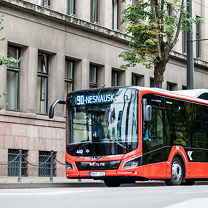
Within the city, you can travel comfortably by public transport, taxi, or by renting bicycles and e-scooters, making it easy to reach all major points of interest.
Kaunas has a centuries-long history
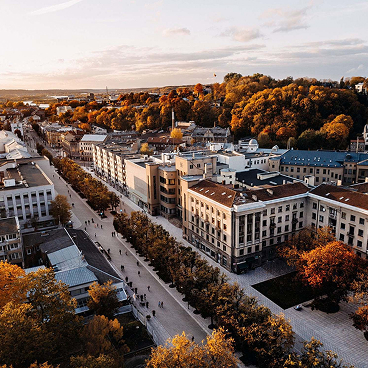
The history of Kaunas spans centuries, beginning in the Middle Ages and distinguished by interwar modernism, which, today, shapes the city’s unique character.

Archaeological excavations show that people settled at the confluence of the Nemunas and Neris rivers as early as the 7th–6th millennium BC, with abundant pottery and other artefacts dating back to the 2nd–1st millennium BC. The settlement that later grew into the city of Kaunas was first mentioned in chronicles in 1361. To withstand attacks by the Teutonic Order, a brick castle was built in the 14th century, becoming an important part of the city’s defensive system.
In 1408, Grand Duke Vytautas granted Kaunas Magdeburg rights, officially establishing it as a city with its own coat of arms and seal, and enabling it to engage more actively in international trade. From that point on, Kaunas began to grow rapidly. The 1441 Hanseatic agreement allowed Hanseatic merchants to open a kontor (office), which operated until 1532. Trade and crafts flourished, and by the 16th century Kaunas had become one of the best-developed cities in the Grand Duchy of Lithuania.
In 1812, Kaunas found itself in the midst of the Russo-French War. At Kaunas, Napoleon crossed the Nemunas River with 220,000 soldiers on pontoon bridges. It was Kaunas that became the city where the French army suffered its final catastrophe. During the war, the city was devastated twice.
The railway built in 1862 and the first power plant that began operating in 1898 were of great importance for the economic strengthening of Kaunas… Buildings were rapidly growing in the New Town… However, the further development of Kaunas was stopped by the First World War.
On February 16, 1918, an independent and democratically organized Lithuanian state was restored with its capital in Vilnius, but…
In 1919, after the Russians occupied Vilnius, the State Council and the Cabinet of Ministers were established in Kaunas. In 1920, After Vilnius was occupied by Poland, Kaunas became the temporary capital and received a historic and unique chance to become the most important city of the young independent state.
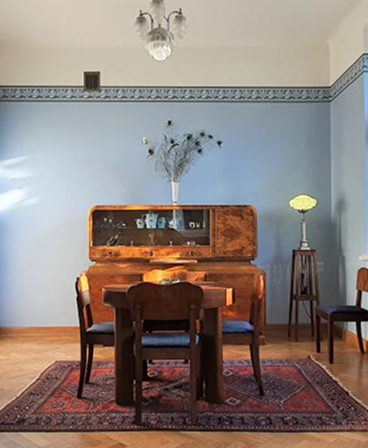
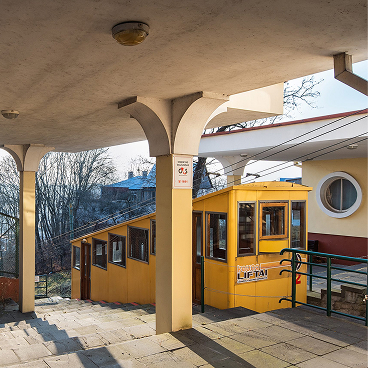
Although Kaunas was not a European-level capital at that time, over the course of 20 years, progressive intellectuals managed to radically change the image of the city by building banks, universities, theaters, funiculars, churches, luxurious palaces, museums, retirement homes, arenas, modern residential buildings… and proved that a young state can speak a unique architectural language that reflects the era.
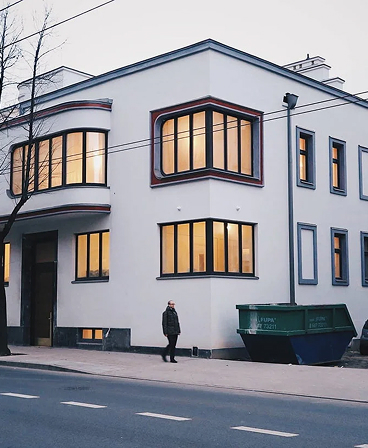
To this day, buildings in the Bauhaus style, which were considered avant-garde in Europe at the time, have survived in Kaunas, with the projects of which Lithuanian architects competed in international exhibitions and won various awards. The Central Post Office, the Bank of Lithuania building, the Officers’ Quarters, the fire station, the Vytautas the Great War Museum, the Romuva cinema, the Ministry of Justice, the Seimas, the Chamber of Commerce, Industry and Crafts, and the Dairy Center are just a small part of the buildings that adorn Kaunas today.
Because of its modernist architecture and the refined style of Kaunas women, the city was often called the “Little Paris” in the interwar period. Kaunas was also a checkpoint in the Monte Carlo Rally, where every participant had to stop and register.
Football, once the dominant sport, had to give way to basketball after the Lithuanian national team won the EuroBasket Championship in Riga in 1937. When Lithuania defended its title again in Kaunas in 1939, basketball became the country’s most beloved sport—a status it holds to this day.
During the interwar period, Kaunas transformed from a provincial outpost of the Russian Empire into a vibrant, modern European city—the cradle of Lithuanian culture and intellectual life.
However, this era of prosperity was cut short by the devastating Soviet occupation. After World War II, when Vilnius regained its capital status, Kaunas became Lithuania’s second-largest city.
Kaunas was inscribed on the UNESCO World Heritage List in 2023.
Important figures associated with Kaunas


